Barn Safety Starts Before an Emergency: Practical Steps Every Equestrian Facility Can Take
Barn Safety Starts Before an Emergency: Practical Steps Every Equestrian Facility Can Take
When we think about barn safety, it's easy to focus on what happens during an emergency. But the reality is that the safest barns are the ones that spend their time preventing emergencies in the first place. Whether you operate a large boarding facility or keep a few horses at home, many of the most important safety improvements are simple, practical, and often inexpensive.
The Most Common Safety Hazards I See
Over the years, I've found that the most common safety concerns in equestrian facilities all relate to fire prevention and electrical safety.
One of the biggest issues is the use of open motor box fans inside barns. While they're inexpensive and readily available, they're not designed for dusty agricultural environments. Dust and debris can accumulate inside the motor, creating a significant fire hazard. Any fan used in or around a barn should beUL 507-ratedfor damp, wet, or agricultural locations.
Another common concern is storing hay inside the horse barn. While it's certainly convenient, hay dramatically increases the fuel load during a fire and allows flames to spread much more quickly. Whenever possible, hay should be stored in a separate structure away from where horses are housed.
I also frequently encounter improper or unprotected electrical systems. This includes wiring that has simply been stapled to walls instead of being enclosed in conduit, indoor-use electrical receptacles installed in barn environments instead of GFCI-protected outlets with outdoor wet-rated covers, and exposed or "naked" light bulbs without protective fixtures. Barns are challenging environments with dust, moisture, and curious horses, so electrical systems need to be designed specifically to withstand those conditions.
The good news is that many barn fires are entirely preventable. Addressing these common hazards can dramatically reduce the risk to both people and horses.
Emergency Plans Should Never Sit on a Shelf
An emergency preparedness plan isn't something you create once and forget. Every equestrian facility should review and update its first aid and emergency preparedness plan at least annually.
Just as importantly, plans should be reviewed after any emergency, near miss, or significant incident through an After Action Review (AAR). These reviews provide an opportunity to evaluate what worked well, identify areas for improvement, and update emergency contacts, procedures, or equipment as needed.
Emergency planning should always be viewed as a living document that grows and changes alongside your facility.
The Safety Equipment Every Barn Should Have
It's easy to become overwhelmed by the long list of equipment available for barns, but I always recommend focusing on the essentials first.
Every barn should have properly maintained fire extinguishers located at each exit and throughout the facility—ideally so that no one has to travel more than 50 feet to reach one. Fire extinguishers should be clearly visible, unobstructed, properly labeled, and inspected annually.
Every facility should also maintain separate first aid kits for both humans and horses. Because their medical needs are very different, each kit should be well-stocked, easy to access, and inspected at least annually.
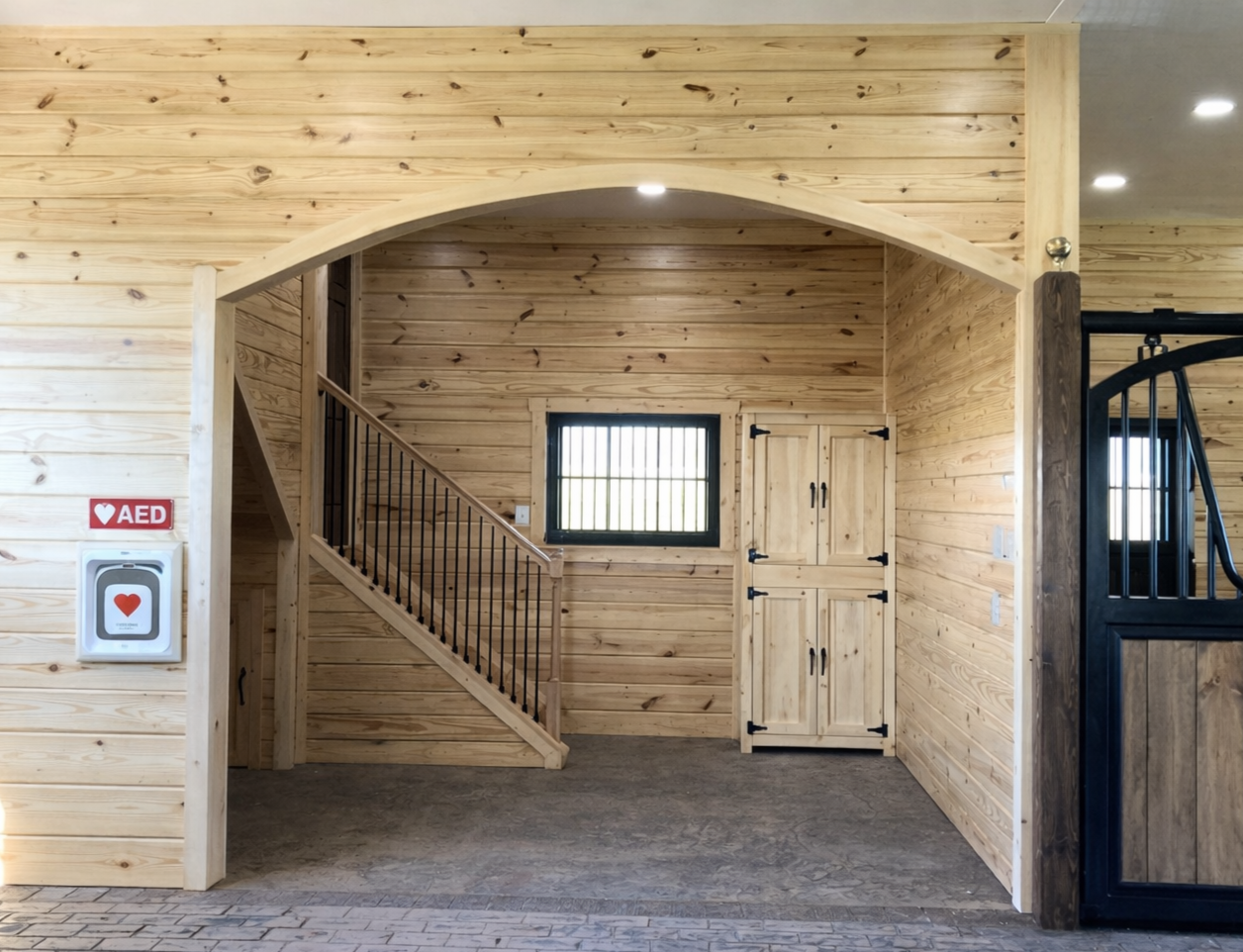
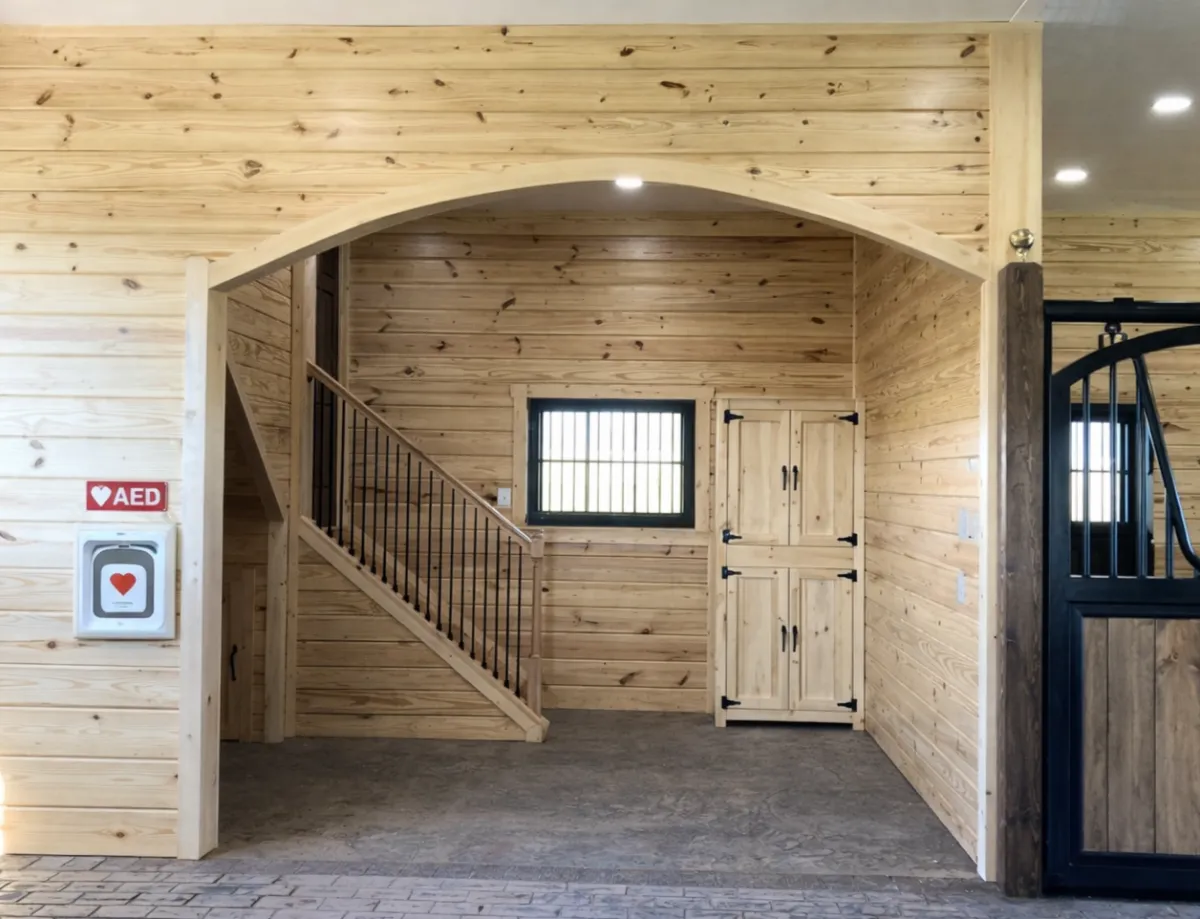
For professional boarding, lesson, or training facilities, I strongly recommend having an Automated External Defibrillator (AED) on-site. In a medical emergency, immediate access to an AED can make all the difference.
One of the most overlooked—but incredibly valuable—pieces of equipment is a rate-of-rise heat detection system. Unlike traditional smoke detectors, these systems perform much better in dusty barn environments. They should not only sound an audible alarm but also notify designated personnel immediately, even when no one is on the property.
There are certainly additional safety measures every facility can implement, but these core items provide the greatest impact and form the foundation of a strong safety program.
Training Makes All the Difference
Emergency preparedness begins long before an emergency actually occurs.
Every staff member, boarder, and rider should receive emergency response training as part of their onboarding, and that training should be reinforced on a regular basis. Emergency contact information, evacuation maps, and emergency action plans should be posted where everyone can quickly find them.
Facilities should also conduct periodic barn meetings that include hands-on emergency exercises such as fire drills, evacuation drills, and reviews of emergency procedures.
Some of the most safety-conscious organizations I've worked with dedicate time every year to comprehensive safety training. Whether it's a single training day or an entire "Safety Week," these programs often include fire prevention, emergency procedures, CPR/AED and First Aid certification, and hands-on fire extinguisher training.
When people are familiar with the plan before an emergency happens, they're far more likely to respond calmly, confidently, and effectively when every second matters.
Safety Doesn't Have to Be Expensive
One of the biggest misconceptions I hear is that improving barn safety requires a large budget. In reality, some of the most effective improvements cost very little—or nothing at all.
My first recommendation is always the same: clean.
Dust, cobwebs, and accumulated debris serve as fuel in a fire and can interfere with electrical equipment. Regularly cleaning rafters, light fixtures, outlets, electrical panels, and using compressed air to remove dust from agricultural-rated fans can significantly reduce fire risk. (Remember, any fan used in or around a barn should be UL 507-rated.)
Keep barn aisles, exits, fire extinguishers, first aid kits, and electrical panels free of clutter and obstructions. Sweep up loose hay and bedding, and maintain clear walkways throughout the facility.
Extension cords deserve special attention as well. They should only be used for temporary purposes, and in a barn environment they should always be outdoor, wet-location rated. Once they're no longer needed, unplug them and store them properly.
Whenever possible, hay, bedding, gasoline, diesel fuel, oils, machinery, vehicles, and lithium batteries should all be stored in a separate building from where horses are housed. Separating combustible materials from occupied barns is one of the simplest and most effective ways to reduce fire risk.
At the end of the day, a clean, organized barn is a safer barn. Good housekeeping not only helps prevent emergencies from occurring, but it also allows staff and first responders to react more quickly and effectively if an incident does happen.
Safety isn't about perfection—it's about preparation. Every improvement, no matter how small, helps create a safer environment for horses, riders, employees, and everyone who walks through the barn doors.